Eating out market on track against IGD forecast
IGD, Date : 16 October 2023 - Nichola Gallagher, Senior Analyst
Tracking the performance of the eating out industry can be challenging due to the numerous factors that influence its operation. It's not easy to determine how these factors will eventually impact operator and supplier performance and overall profitability.
By analysing various data points, we have identified the market drivers that impact the performance of the eating out industry. We compare our findings to our earlier forecast published this year, thus providing valuable insights into the industry's 2023 performance in H1, with our view on how the rest of 2023 will shape up.
To understand how we are tracking against our latest forecast we have broken down the analysis of the market into three key categories – Penetration, Frequency, and Spend. The first two categories will ultimately affect volume of meals and drinks sold, whereas spend will affect transactional value.

Penetration
Consumer confidence is slowly but steadily improving as people become more attuned to their financial situation, albeit with some hesitancy to spend as much on eating out as they previously would have. This shift in confidence primarily amongst more affluent consumers is linked to a recovery in real wage growth. International tourism levels have also bolstered the number of visits to hotels, visitor attractions and hospitality and entertainment venues.
Frequency
The frequency of visits is varied amongst the different sectors, with full service restaurants currently being hit hardest reflected in bookings, visits and spend data being down vs last year. Despite the poor weather experienced during the summer, which often leads customers to switch from outdoor pubs to indoor dining, visits to restaurants did not increase. Whereas, routine and unplanned visits are in decline across all dining out environments, the second half of the year will provide opportunity for operators to leverage festive special occasion dining.
Spend
Inflation will ultimately be the main driver of growth in 2023, and although foodservice inflation peaked in the early part of 2023 and is now declining, prices are still significantly higher than they were last year. We expect there to be further price increases on menus as operators try to bridge the profit gap created by continuing operational and raw material cost increases.
Eating out is therefore not likely to become more affordable for many in the short to medium term resulting in consumers continuing to cut back on number of items ordered per visit and selecting cheaper dishes.
In summary: on track overall but variations by sector
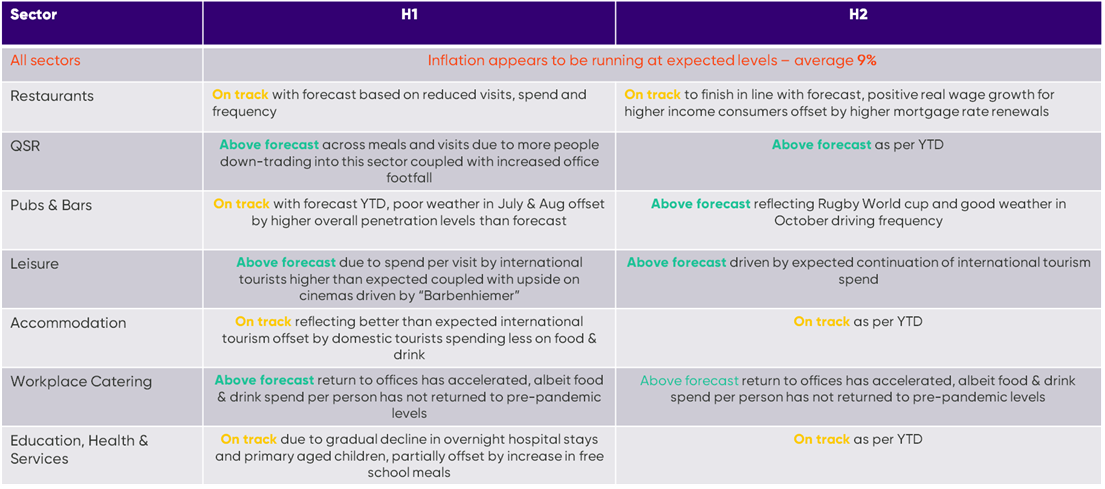
By using this framework and analysing multiple data points and performance for H1, we have evaluated whether each sector of the eating out market is meeting our 2023 forecast. In summary we believe that we are tracking in line for Restaurants, Accommodation and Services and slightly above expectations for QSR, Leisure and Workplace.